



Master Enterprise Resource Planning Skills for Global Career Success**
The SAP ERP Professional Training Program is a complete, industry-aligned course designed to equip learners with the core skills needed to work confidently with SAP—the world’s leading Enterprise Resource Planning (ERP) system. SAP is used by top companies across manufacturing, finance, retail, healthcare, supply chain, IT, and countless other industries. Mastering SAP ERP significantly enhances your professional value, opens doors to high-demand careers, and empowers you with the ability to manage real-time business operations efficiently.
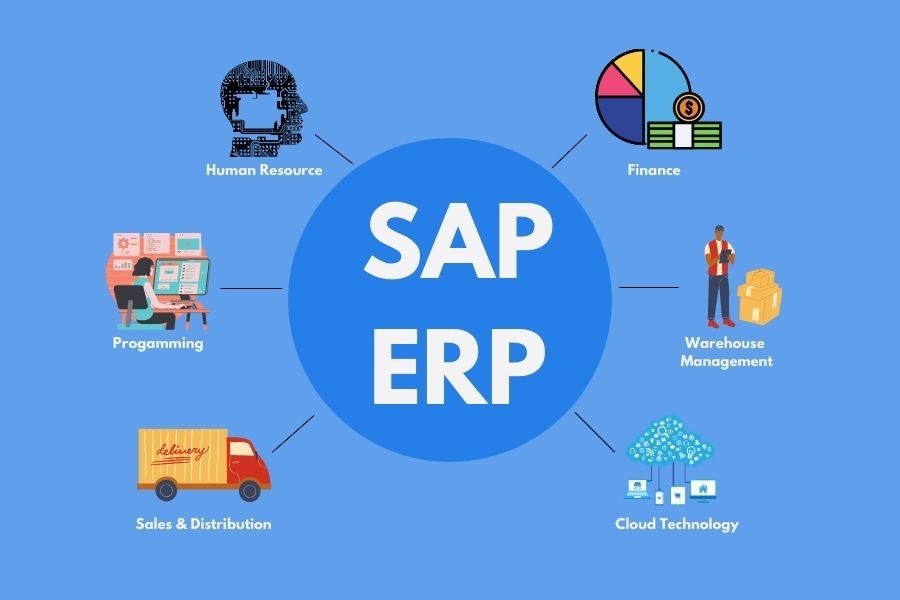
Whether you are a student, a working professional, or someone switching careers, this program provides practical, job-ready knowledge of SAP modules, workflows, and business processes. You will learn how data flows between departments, how large organizations operate digitally, and how SAP integrates financials, inventory, HR, sales, procurement, and production under one unified system.
Why This Course Matters
In today’s global business environment, organizations rely on SAP ERP to optimize processes, improve efficiency, and make data-driven decisions. Skilled SAP professionals are in high demand because they help companies:
Automate operations
Maintain accurate business records
Improve decision-making
Reduce errors and duplication
Streamline workflows across departments
The SAP ERP Professional Training Program prepares you to become part of this growing digital workforce with essential ERP knowledge and hands-on SAP experience.
What You Will Learn in the SAP ERP Professional Training Program
This program covers a wide range of topics from basic SAP navigation to core functional modules. It’s structured to give you strong conceptual understanding PLUS practical skills.
1. Introduction to SAP & ERP Concepts
Get a strong foundation before diving into modules:
What is ERP and why companies use it
Overview of SAP and its architecture
SAP GUI navigation
Client, company, company code structure
Master data vs. transactional data
SAP landscape (DEV, QA, PROD)
This ensures you understand how SAP works at an enterprise level.
2. SAP FICO (Finance & Controlling – Functional Overview)
Learn how SAP manages financial operations:
General ledger accounting
Accounts payable & accounts receivable
Asset accounting
Bank accounting & reconciliation
Cost center & profit center basics
Financial statements & reporting
Perfect for learners interested in accounting, finance, or audit roles.
3. SAP MM (Materials Management) – Procurement & Inventory
Understand how companies purchase goods and manage stock:
Vendor management
Purchase requisitions & purchase orders
Goods receipt & goods issue
Stock transfers
Inventory tracking & batch management
Invoice processing
Ideal for careers in supply chain, procurement, and warehouse operations.
4. SAP SD (Sales & Distribution) – Customer & Sales Processes
Explore how SAP handles the entire sales cycle:
Customer master data
Sales orders
Delivery processing
Billing & invoicing
Pricing conditions
Sales reporting
Important for sales, marketing, logistics, and business development roles.
5. SAP HCM (Human Capital Management) – HR Operations
Get an overview of HR functions within SAP:
Employee master records
Payroll basics
Time management
Personnel administration
Leave & attendance tracking
Relevant for HR professionals and administrative staff.
6. SAP PP (Production Planning) – Manufacturing Processes
Understand how SAP manages production:
Material requirement planning (MRP)
Bill of materials
Work centers & routings
Production orders
Scheduling & capacity planning
Useful for those interested in manufacturing or engineering environments.